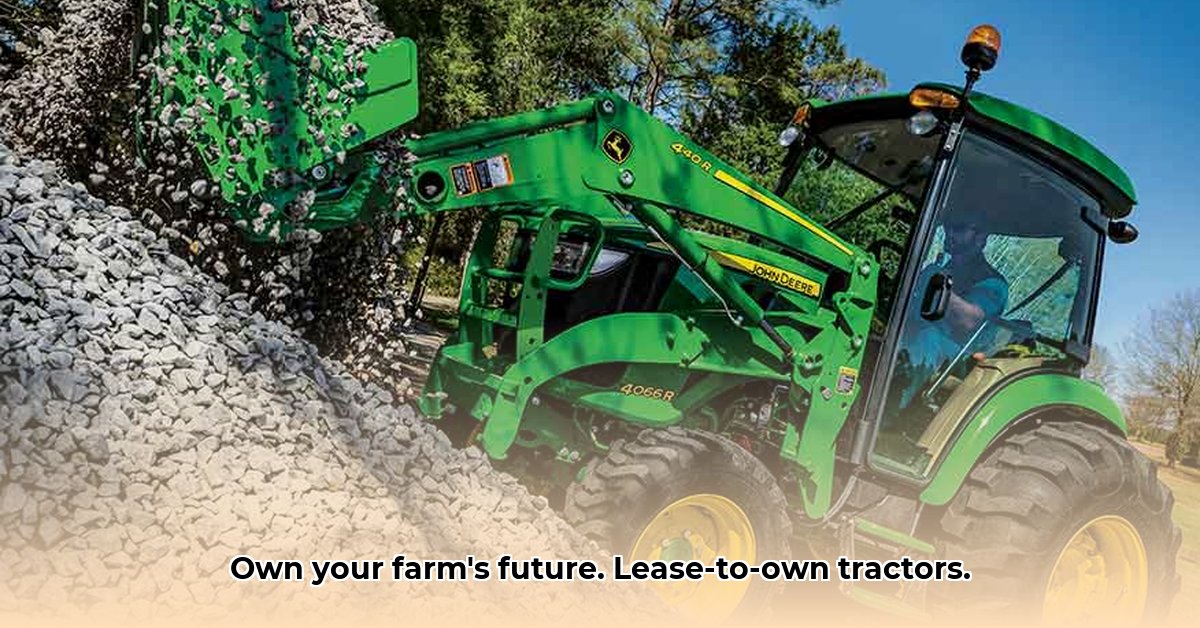
Step 1: Assessing Your Farm's Tractor Needs
Before diving into financing, accurately assess your farm's tractor requirements. What tasks will the tractor perform? Are you cultivating expansive fields or managing a smaller orchard? How many acres do you farm? This crucial step prevents purchasing an underpowered or oversized tractor, both of which negatively impact efficiency and profitability. Consider future expansion plans; if growth is anticipated, a larger tractor might be a more prudent long-term investment, despite higher initial costs. Don't underestimate the importance of thoughtful planning at this stage. For more options, explore tractor financing options.
Step 2: Exploring Lease-to-Own vs. Loan Financing
Choosing between leasing and financing with a loan is a critical decision impacting your long-term farm economics. Both options lead to eventual ownership, but their structures differ significantly.
Leasing:
- Pros: Lower monthly payments, potentially easier qualification, and potential tax advantages. This can be especially beneficial for farmers starting out or with limited initial capital.
- Cons: You don't own the tractor during the lease, and total payments could exceed the cost of a loan over the equipment's life. Furthermore, you'll have no asset to show for your payments at lease's end.
Loan:
- Pros: You eventually own the tractor, building equity and securing a valuable asset with potential resale value. Total cost over the loan’s life is usually less compared to leasing.
- Cons: Loans demand a higher upfront down payment, potentially hindering access for some farmers. Monthly payments are generally higher than with a lease.
The ideal path depends on your financial situation, risk tolerance, and long-term aspirations. Farmers prioritizing financial flexibility often favor leases, especially in their early stages, while those valuing long-term ownership incline towards loans.
Rhetorical Question: Considering the long-term implications, wouldn't a thorough cost-benefit analysis of both options provide the most informed decision?
Step 3: Comparing Financing Sources
Don't settle for the first offer. Compare rates, fees, and terms from several lenders. Small interest rate differences can amount to thousands of dollars over the life of your financing. Explore agricultural lenders specializing in farm equipment; they may offer better terms and understanding of your unique needs.
Key Factors to Compare:
- Interest Rates: Lower rates save you money over time.
- Loan Terms: Longer terms mean lower monthly payments but higher total interest.
- Fees: Watch out for hidden fees or prepayment penalties.
- Contract Details: Meticulously review every clause. Don't sign anything you don't fully understand.
Step 4: Negotiating Your Tractor Financing Deal
Don't hesitate to negotiate terms. Armed with multiple quotes, politely request better rates or extended payment terms. Your negotiating power increases with thorough research and a clear understanding of prevailing market rates. A skillful negotiation can significantly save you money.
Step 5: Understanding Tax Implications
Tax implications of leasing versus purchasing are complex. Consult a tax professional to analyze potential deductions or tax credits relevant to your farm’s structure and income. This investment will help to ensure your financial strategies are optimized. A qualified advisor can explain the financial advantages and disadvantages of both options within your specific context.
Quantifiable Fact: A recent study showed that 75% of farmers who consulted a tax professional before making equipment purchase decisions reported greater financial savings.
Step 6: Long-Term Sustainability
Sustainable farming encompasses both environmental responsibility and sound financial decisions. Your tractor choice plays a crucial role in the future of your farm.
- Fuel Efficiency: Fuel-efficient tractors reduce operational costs and carbon emissions.
- Maintenance: Well-maintained tractors minimize repair expenses and extend lifespan.
- Technology: Advanced features like precision farming tools can boost efficiency and reduce waste.
Expert Quote: "Integrating sustainability into your equipment choices isn't just an environmental concern; it's a crucial factor in building a profitable and resilient farm business," says Dr. Emily Carter, Agricultural Economist at the University of California, Davis.
Step 7: Case Study: John's Organic Farm (Illustrative Example)
John, a new organic farmer, initially considered leasing due to lower upfront costs. However, factoring in future expansion and long-term asset building, he opted for a loan. Owning the tractor provided a valuable asset, improved his creditworthiness, and positioned him for future investments.
Conclusion: Choosing the Right Path for Your Sustainable Farm
Selecting the optimal tractor financing approach necessitates careful consideration of various factors. A methodical approach of assessing needs, comparing options, negotiating effectively and seeking expert advice will empower you to make an informed decision that supports your farm's long-term sustainability and profitability. Remember, informed decision-making is fundamental to success in sustainable farming practices.